In detail
The technical stuff, explained straight
Where the theory meets the van. Materials, methods, brand differences and the specific situations we deal with week in, week out across Wiltshire.
What magnetite is and why it wrecks systems
Magnetite is the black iron oxide sludge that forms when untreated water reacts with the internal steel of radiators and pipework. It's magnetic, hence the black paste that sticks to a magnetic filter or a pen magnet on the pipework. Over years, without proper inhibitor, magnetite settles at the low points of the system: the bottom of radiators, the base of vertical drops, the strainers on pumps and diverter valves. It blocks flow, wears pumps and, in modern condensing boilers, fouls the tight waterways of the heat exchanger. A power flush is the only reliable way to remove it once it's built up.
When power flushing is (and isn't) the right answer
Right answer: cold radiators at the bottom, repeat pump failures, black-water bleeding, sludge visible on a magnetic filter, new-boiler install on a system 10+ years old. Wrong answer: air-locked radiators (a different problem, solved by bleeding and repressuring), leaks (need to be found and fixed first), or a system that's fundamentally undersized (needs radiator changes, not a flush). We test the system water first, if a full flush isn't needed, we'll say so.
What separates a good power flush from a poor one
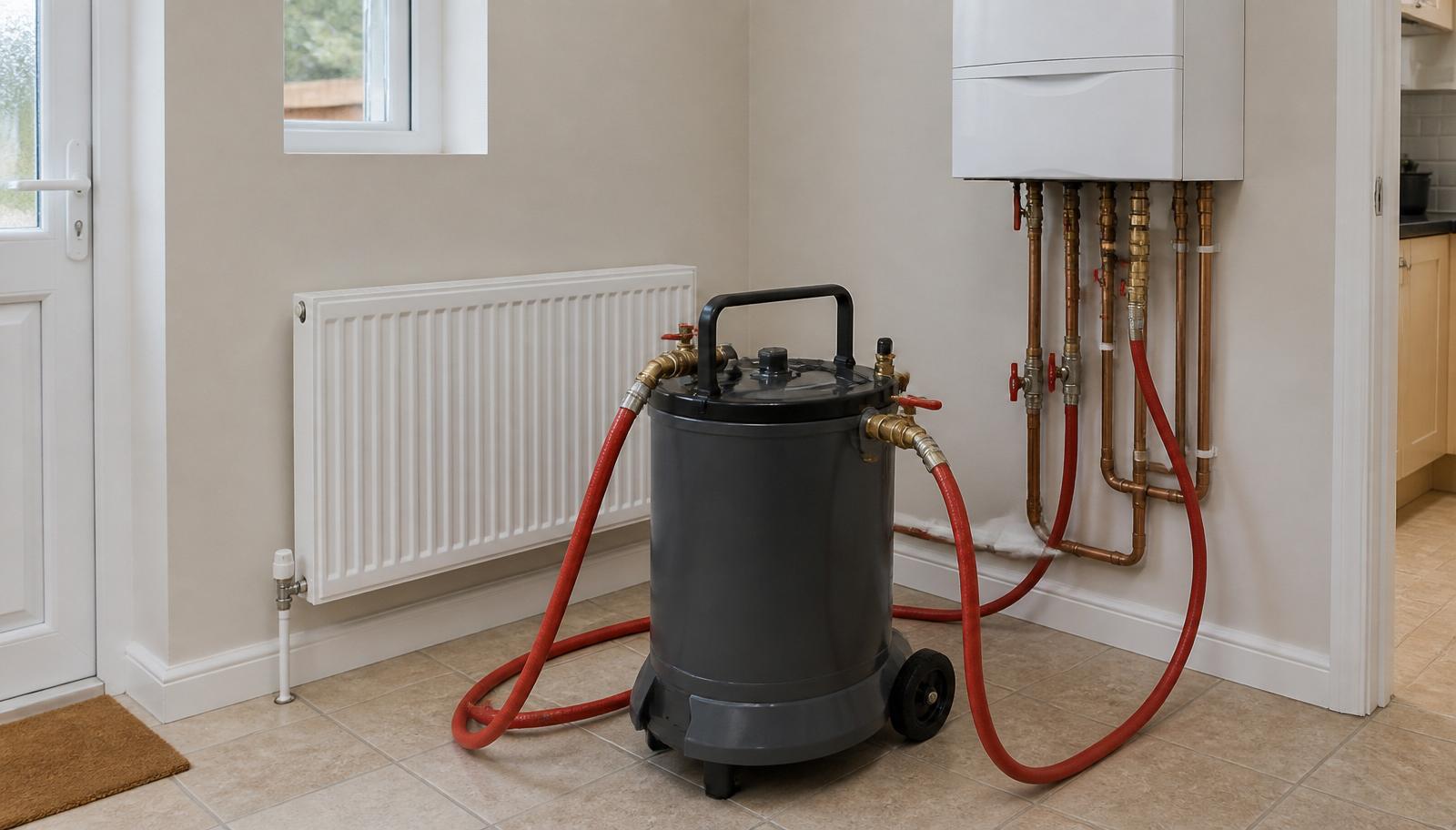
A proper flush uses a purpose-built high-flow, low-pressure pumping unit, not the boiler's own pump, and each radiator is isolated and flushed individually, one at a time, with the flush pump agitating the pipework and radiator to lift settled sludge. Chemical cleaner is used at the correct concentration and dwell time, with heat applied where possible. Post-flush, the system is drained and refilled with clean water, dosed with fresh corrosion inhibitor at the correct concentration and, critically, a magnetic filter is installed on the return so future magnetite is captured, not recirculated.
Filters and inhibitors | the invisible half of the job
A magnetic system filter (Fernox TF1, MagnaClean Professional 2, Sentinel Eliminator or similar) catches magnetite before it can settle in the boiler heat exchanger. It's a five-minute annual check on a service. Combined with a correctly dosed inhibitor, 1–2% concentration, Fernox F1, Sentinel X100 or the manufacturer's specified product; the system stays clean for the boiler's warranty life. Skipping either turns a good flush into a temporary fix.
Chemical clean vs full power flush
On systems where sludge is modest and the customer wants to minimise cost, a hot chemical clean (circulating cleaner through the system for a period, then draining and refilling) can be adequate, especially at the same time as a boiler swap. It's cheaper than a full flush but less effective on heavily fouled systems. We'll be honest about which is appropriate for your system after water testing.