In detail
The technical stuff, explained straight
Where the theory meets the van. Materials, methods, brand differences and the specific situations we deal with week in, week out across Wiltshire.
Wiltshire water and why it's so hard
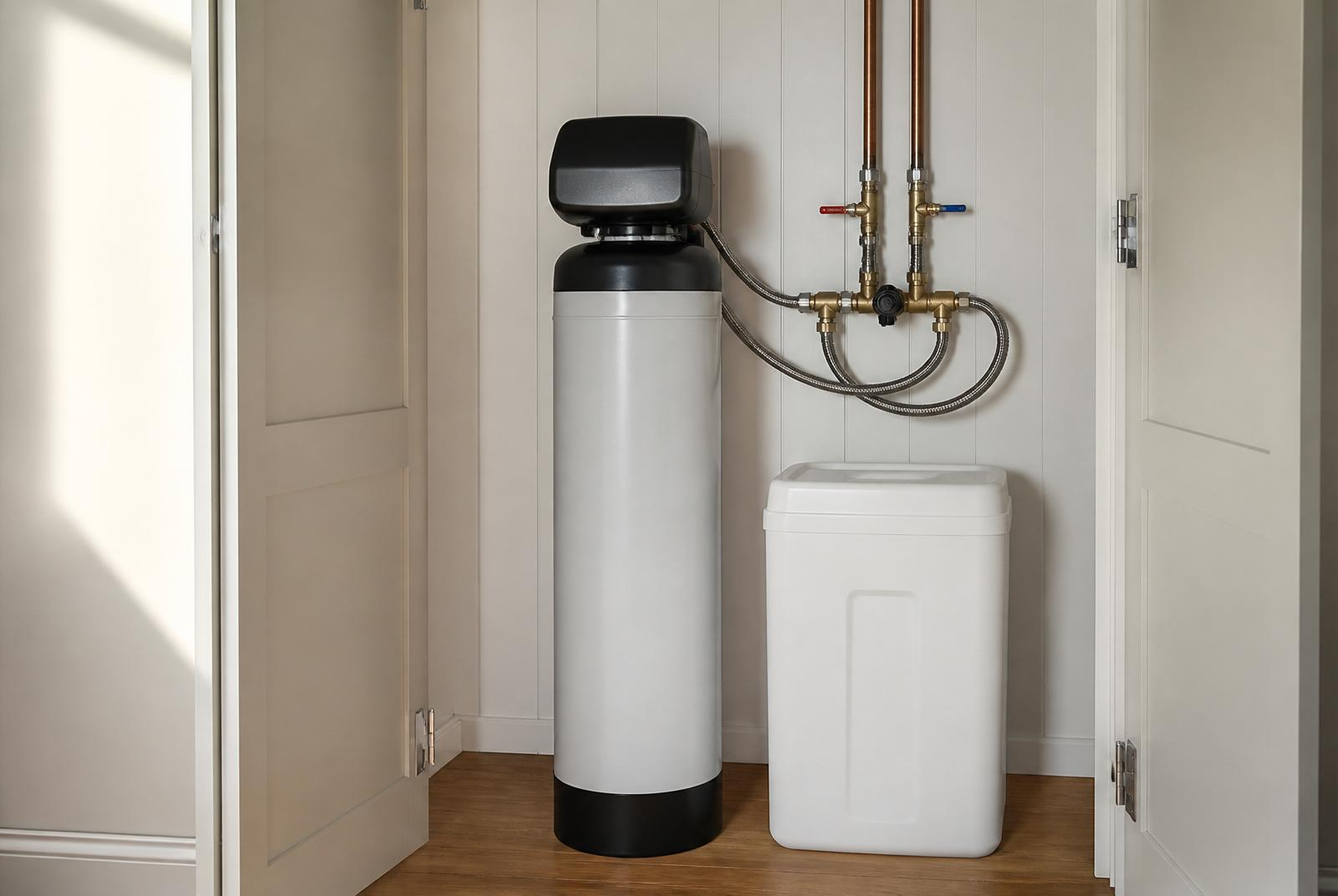
Most of north and east Wiltshire, including Broad Town, Royal Wootton Bassett, Marlborough, Calne, Swindon and the surrounding villages, sits on the chalk aquifer. That gives excellent-tasting drinking water but very high calcium and magnesium content, technically 'hard' or 'very hard' water. It's healthy to drink; it's punishing on plumbing. A softener uses an ion-exchange resin (regenerated periodically with salt) to swap the calcium and magnesium ions for sodium ions, giving genuinely soft water throughout the house.
Whole-house softening with a drinking-water bypass
Best-practice installation keeps one hard-water tap in the kitchen (typically the cold tap on the kitchen sink) for drinking, cooking and filling the kettle, some people prefer the taste of the natural hard water, and there's a marginal sodium argument for pregnancy, infants and low-sodium diets. Everywhere else, showers, baths, hot taps, appliances, boiler, cylinder, runs on softened water. That's the arrangement we fit as standard unless you tell us otherwise.
Sizing and unit selection
Softeners are sized on household water use and local hardness. Under-sized softeners regenerate too often (using more salt) and can't keep up with peak-demand periods. Over-sized units cost more up front and take longer between regenerations (which risks bacterial growth in the resin bed). We'll size to your household honestly. Metered / demand-based softeners (Harvey, Kinetico, Culligan, Monarch) are the modern standard, timer-only units are largely obsolete.
Regulations and best-practice fittings
Water Regulations require an approved installation with an AA air-gap or equivalent backflow protection to the drain, a proper isolation and bypass arrangement, and non-return protection to prevent softened water back-feeding the incoming main. We fit all of that as standard; it's what protects your household water supply and stops any risk of contamination.
Maintenance | what you actually need to do
Modern softeners are close to fit-and-forget. Top up salt every few weeks (a low-salt warning is standard on most units), keep the salt bin lid closed, and let us test the softener on your annual boiler service. Resin beds last 10–15 years typically; brine valves and controls are user-serviceable and cheap to replace when needed.